 Michael S. Liberman
London and Paris Travel Gear and Workflow
Note: I usually write these post-trip gear and workflow reviews a couple of months after I return from a trip. I’m writing this in January 2026 – many years after the London-Paris trip – but dating this as November 15, 2009 like it was posted just a couple of months after returning.
Here is my overview of the gear I carried to London and Paris followed by the photo and video workflows I used to handle the media files when I returned.
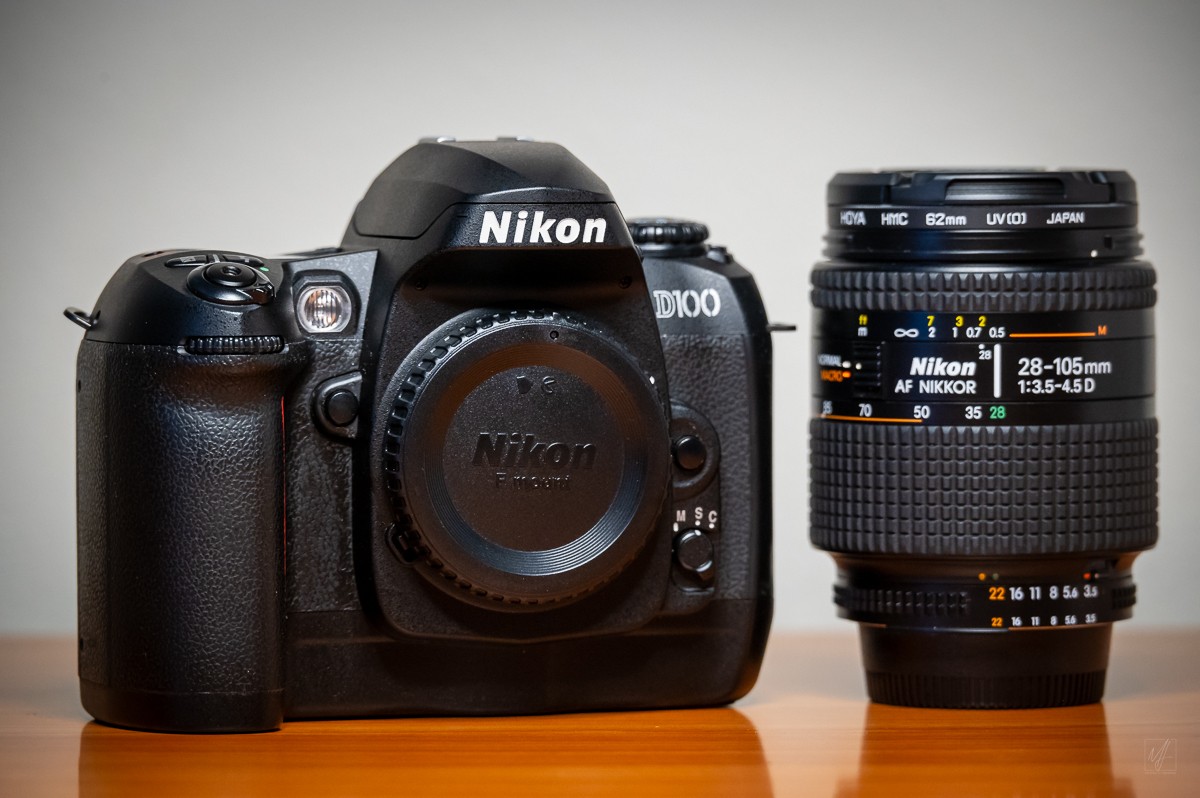
After never taking an international trip I somehow closed out my first 5 decades with two overseas trips in a couple of months. This trip to London and Paris was fast-paced. I spent a couple of days seeing the sights in London, saw U2 perform at Wembley Stadium, experienced crossing the English Channel via the Channel Tunnel, and took a day to explore Paris. So what photo and video gear did I decide to bring? I had the Nikon D100 DSLR that I could pair with the 28-105mm and the 70-300mm for a solid travel kit. However, as an early generation digital camera the Nikon D100 was stills only, without video capability like a more modern DSLR. I would still need to bring a dedicated camcorder to capture video of the trip.
Fairfax, United States
NIKKOR Z 28-400mm f/4-8 VR at 190 mm • ISO 6400 • 1/20 sec at f/8.0
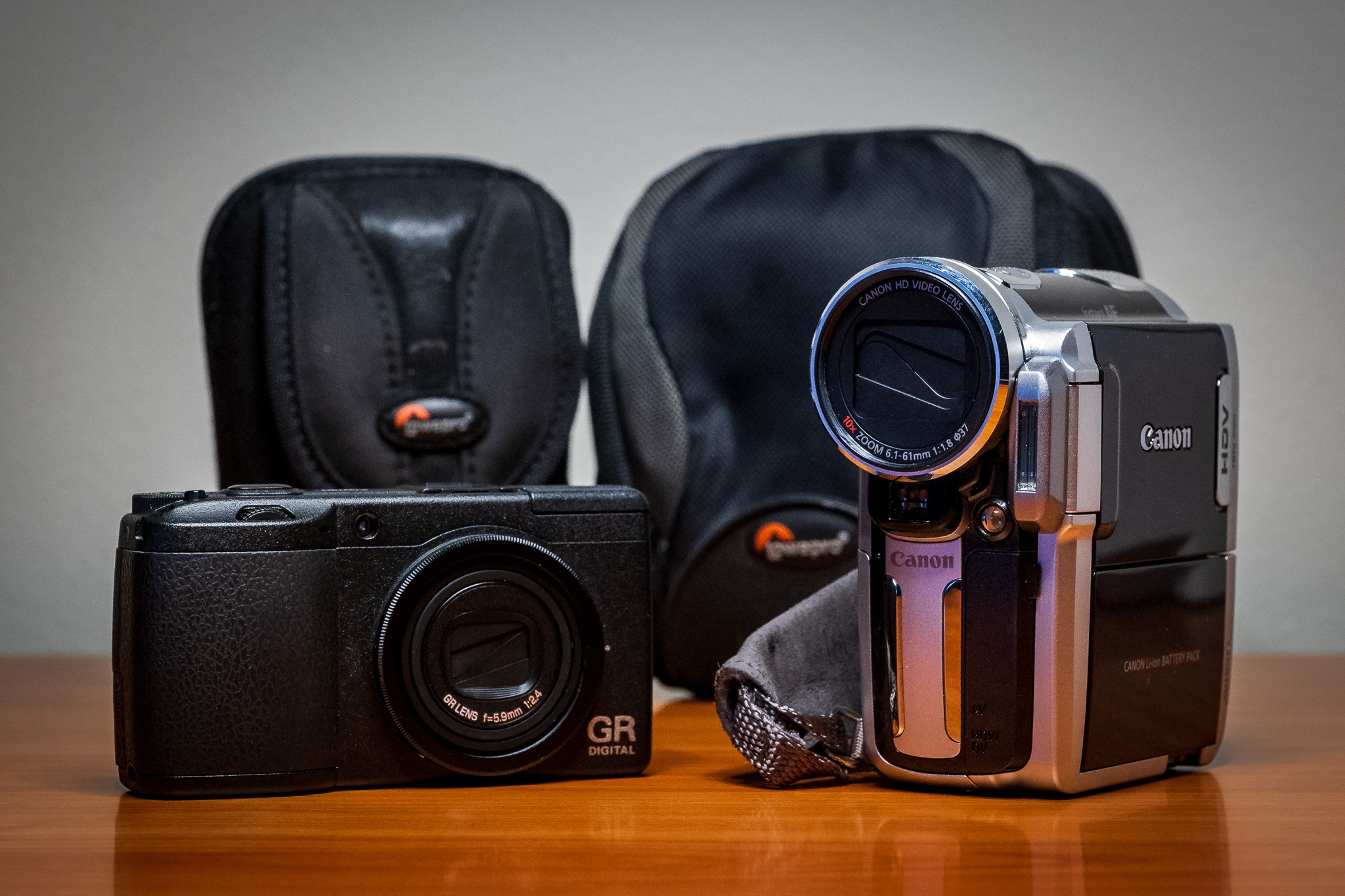
The combination of the Ricoh GR Digital II compact digital camera and the Canon HV10 HDV camcorder worked well in China. The GR Digital II is small and easily packable for travel, with excellent picture quality. The HV10 is equally packable and records in the HDV format with 1440×1080 resolution. I decided to use the same pairing on this trip. I packed the Ricoh and Canon in small LowePro camera pouches and packed the pouches in my carryon backpack.
Fairfax, United States
Nikon Z6II • NIKKOR Z 24-120mm f/4 S at 69 mm • ISO 6400 • 1/25 sec at f/8.0
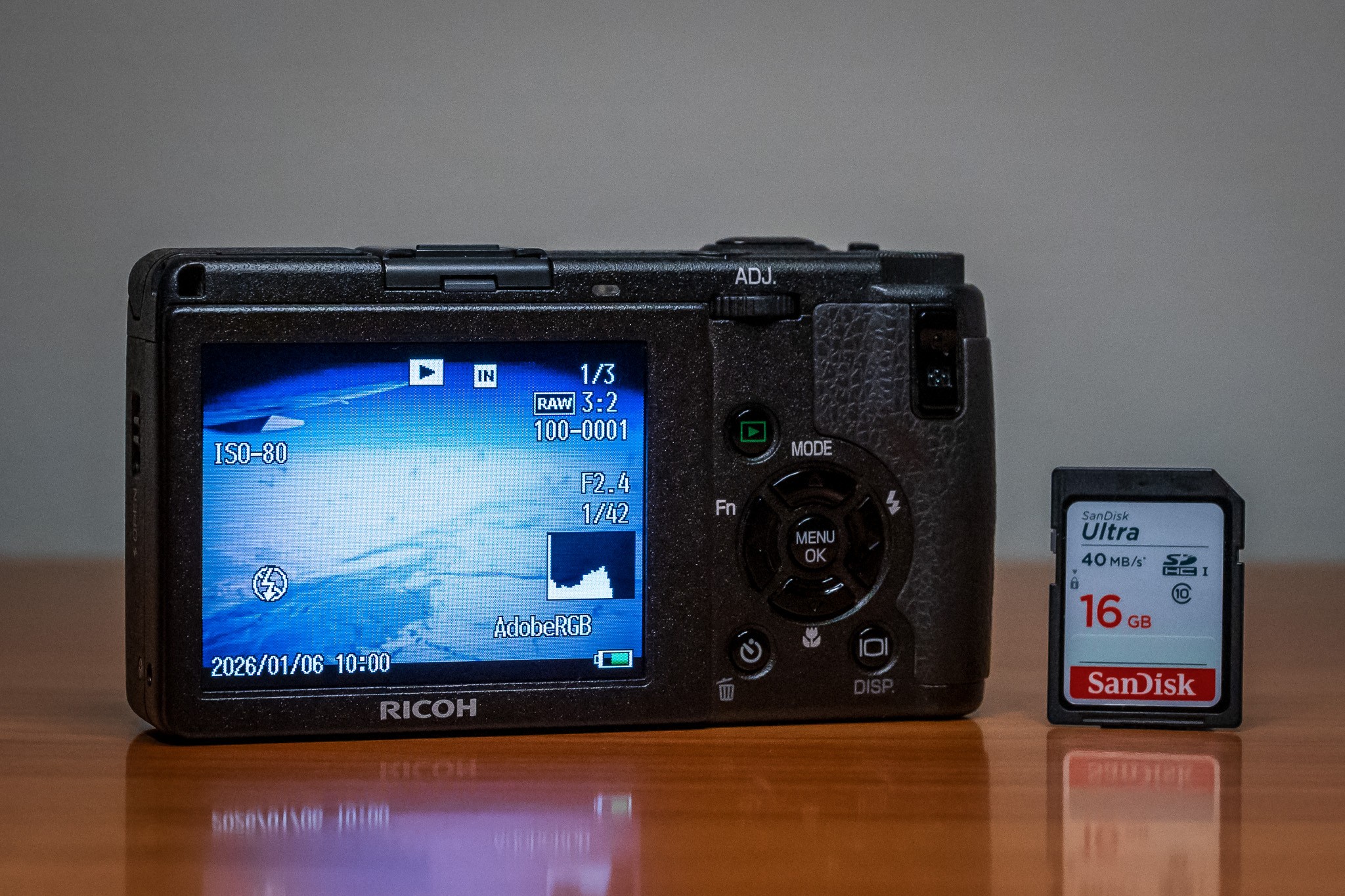
The Ricoh GR Digital II holds one memory card. For this trip I used a SanDisk Ultra 16 GB SDHC Class 10 card. The camera natively captures a RAW file in DNG format with a small JPG as a backup. The DNG files are around 15 MB and the JPG files about 100 KB. With this setup the card capacity was around 800 to 1,000 images. I’m not exactly sure how many photographs I took with the Ricoh GR Digital II on this trip, but once I’d completed the workflow process I ended up with 237 images. That’s a shooting ratio of 47.4 images per day or slightly more than the 46 images per day during the China trip – but about half of what I will average on later trips.
Fairfax, United States
Nikon Z6II • NIKKOR Z 24-120mm f/4 S at 69 mm • ISO 6400 • 1/160 sec at f/8.0
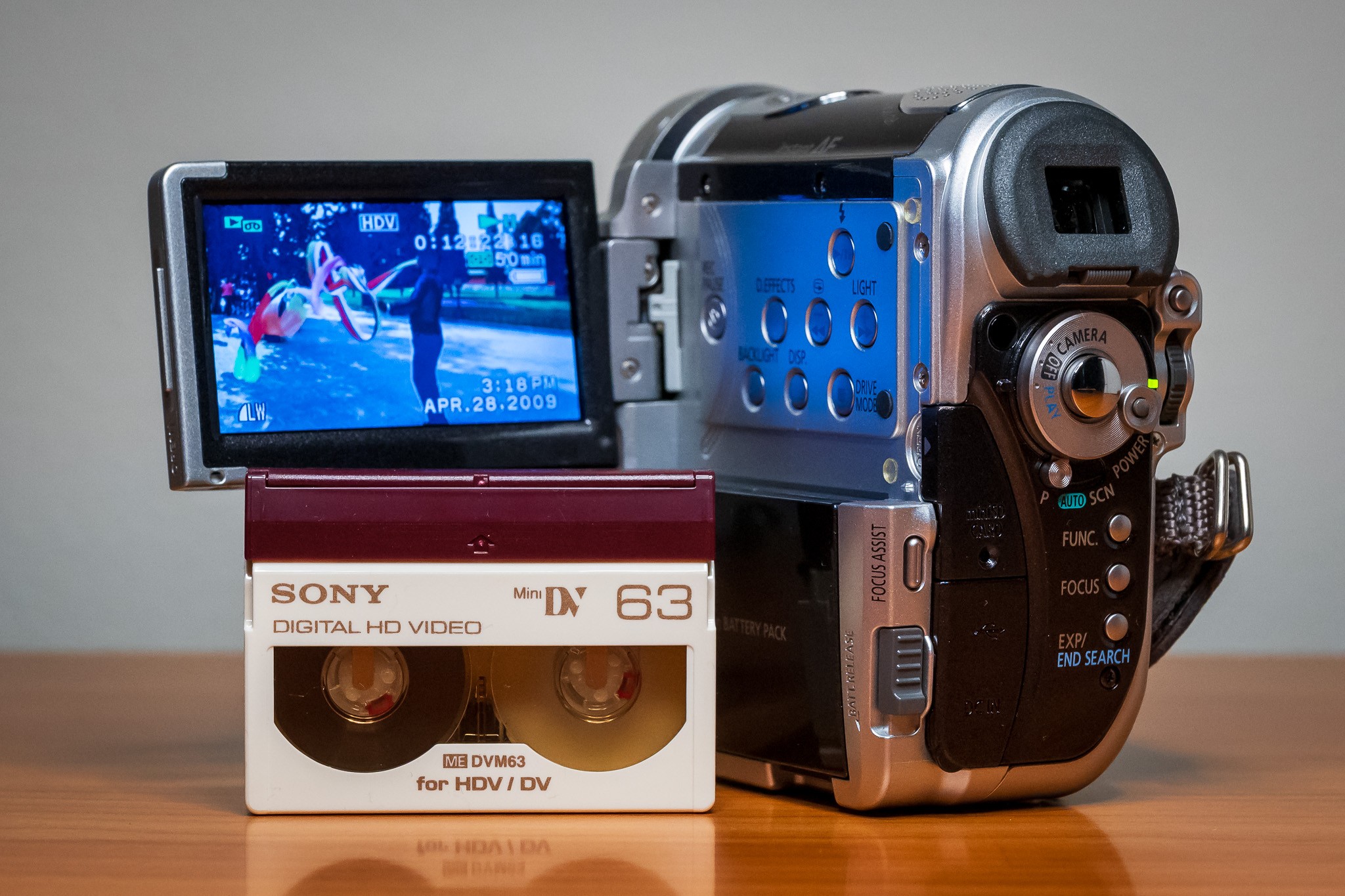
With the Canon HV10 I brought along a single Sony MiniDV tape with a recording capacity of 63 minutes. My shooting strategy was to essentially edit in camera, with a shot length between 5-8 seconds. I finished the trip with about 24 minutes of recorded video, averaging 6 minutes of video per day. But a few hours into the Paris day trip, the Canon HV10 locked up. The downside of a mechanical tape-based recording system. I was left to document the remainder of the trip with stills only from the Ricoh.
Fairfax, United States
Nikon Z6II • NIKKOR Z 24-120mm f/4 S at 69 mm • ISO 6400 • 1/80 sec at f/8.0
The London-Paris trip preceded the introduction of this blog by several years. So while there were no daily blog updates, I did get an iPhone 3GS a couple of months before the trip and used the Facebook app for a couple of posts each day.
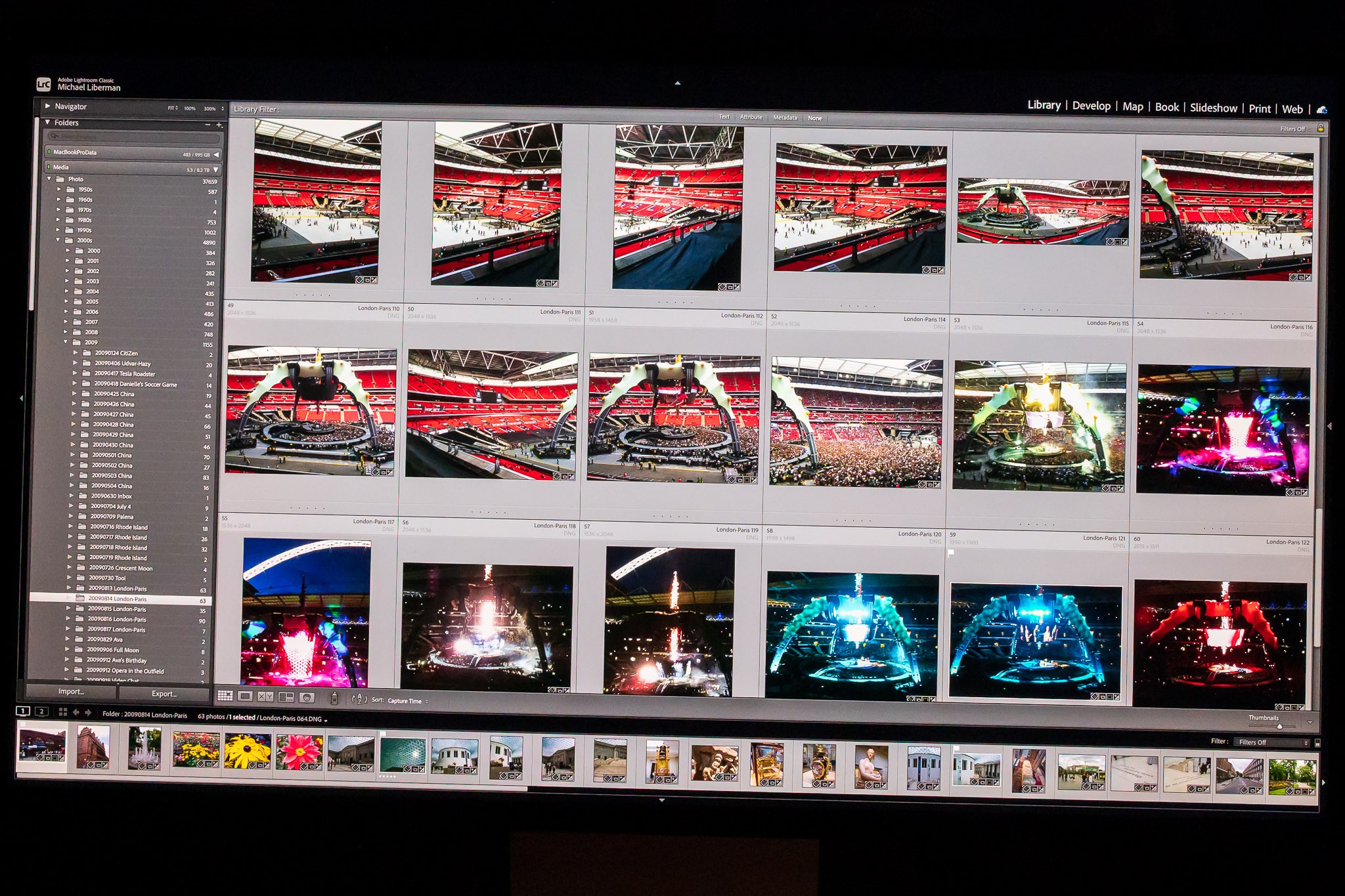
Back at home, I used my established workflows for photo and video. Photos were imported using Adobe Photoshop Lightroom to folders named by date and location or event, duplicates and rejects were deleted, files were renamed by location or event with sequential numbers, keyworded, geoencoded, captioned, and post-processed.
Fairfax, United States
Nikon Z6II • NIKKOR Z 24-120mm f/4 S at 24 mm • ISO 3200 • 1/125 sec at f/8.0
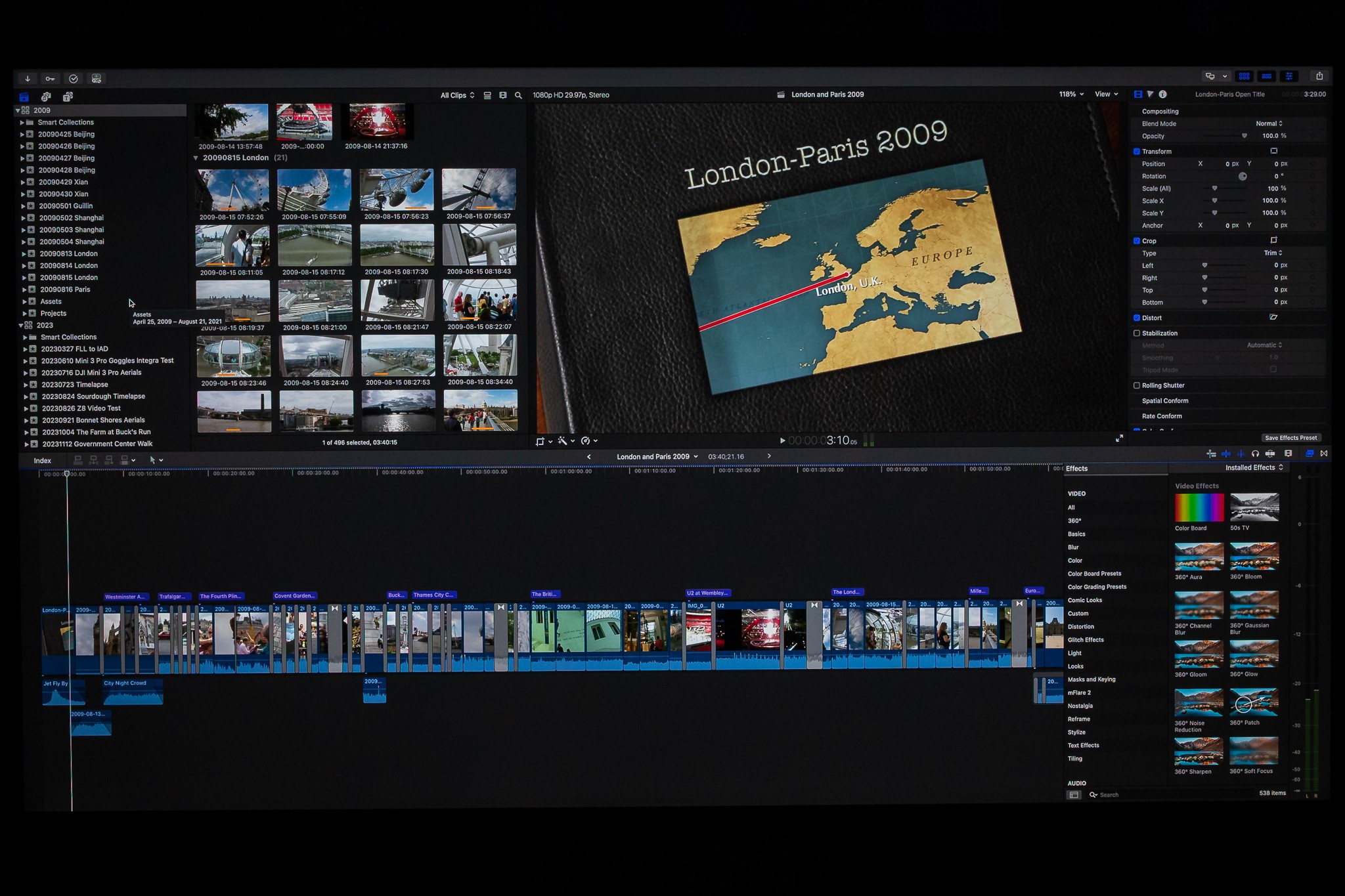
For video … I purchased Final Cut Express a couple of weeks after returning from London and Paris. Even so, given the success I had editing the China video with iMovie, I decided to do same with the London-Paris video. The edit process took 25 hours spread across Labor Day, Columbus Day, a couple of Saturdays in late October and the first Sunday in November. Complicating the edit … how to replace the footage I missed from the Paris day trip after the HV10 died! I used still images for the last minute of the video and felt like I captured the full experience of the trip in the finished video. (A couple of side notes … I sent the HV10 to Canon for repair and used the camcorder for another year … I never used Final Cut Express for a video project. I started working with Final Cut Pro X a couple of years later and never looked back. Like I did with the China 2009 Video project, a few years after the trip I recreated the London-Paris 2009 Video project in FCPX for archival purposes.)
Fairfax, United States
Nikon Z6II • NIKKOR Z 24-120mm f/4 S at 24 mm • ISO 3200 • 1/60 sec at f/8.0
I posted the finished the London and Paris 2009 photo gallery on August 22, 2009 just a couple of weeks after returning from the trip. The video took a little while longer to complete and was posted on November 8, 2009. A much faster turn-around compared to the time to post media from subsequent trips! After back-to-back international trips I knew I wanted to see more of the world, but I wouldn’t book the Greece and Turkey trip until September 2010 for travel in April 2011. But before that trip I made a camera purchase that would completely change my approach to travel photos and video!
